| Group: | GSG |
| Date: | 6 March 2026 |
| Location: | Borrowdale, Cumbria |
| Present: | Alan Brentnall |
In Search of Millican Dalton’s Cave
Every year, on a weekend in either February or March, an ageing group of climbers, mountaineers and fell walkers (The Langdale Festerers) meet up in Keswick for a re-union dinner. In 2026, to join in with the “Festerers’ Dinner”, Alison and I headed down on the train to Keswick with the intention of having a long weekend. The forecast was good, so we intended to get some Lakeland walks in, but we were both injured, so we had to be realistic.
For our first outing, we chose to take a walk around Castle Crag in Borrowdale. In his excellent “Pictorial Guide to the North Western Lakeland Fells”, Alfred Wainwright describes this hill as “a protuberance on the rough breast of Low Scawdel” but goes on to say that “if a visitor to Lakeland has only two or three hours to spare, poor fellow, yet desperately wants to reach a summit and take back an enduring memory of the beauty and atmosphere of the district … let him climb Castle Crag”.
How could we refuse such an invitation? So, with my swollen knee, injured by a stumble in the Stream Chamber of Cnoc nan Uamh the previous week, well strapped up with kinesiology tape, we caught the bus from Keswick to Grange.
En route, a thought crossed both our minds. “What about finding Millican Dalton’s cave?” This was place we’d found thirty years ago, with our children, and both of our lads found it to be a great place to visit. Other than the word “caves” at several points in the area, there’s no mention on current OS maps, but Wainwright quite rightly gives Millican Dalton a paragraph in the aforementioned guide Sadly, we didn’t have the book with us!
Millican Dalton was quite a famous character in his day. Born in 1867 in Nenthead, a place which is nowadays well known to cavers and mine explorers, his family later moved to Essex, where he eventually became a London clerk. But, in the early quarter of the 20th century, yearning for the hills and his northern home, he “dropped out” and became a self-styled “Professor of Adventure”. Basically he was an early guide, leading clients on canoeing and climbing trips. He spent the winter days in a shed in Buckinghamshire, making and mending his clothes and equipment, and, for the rest of the year, lived in a cave in High Howes Quarry on Castle Crag in Borrowdale.
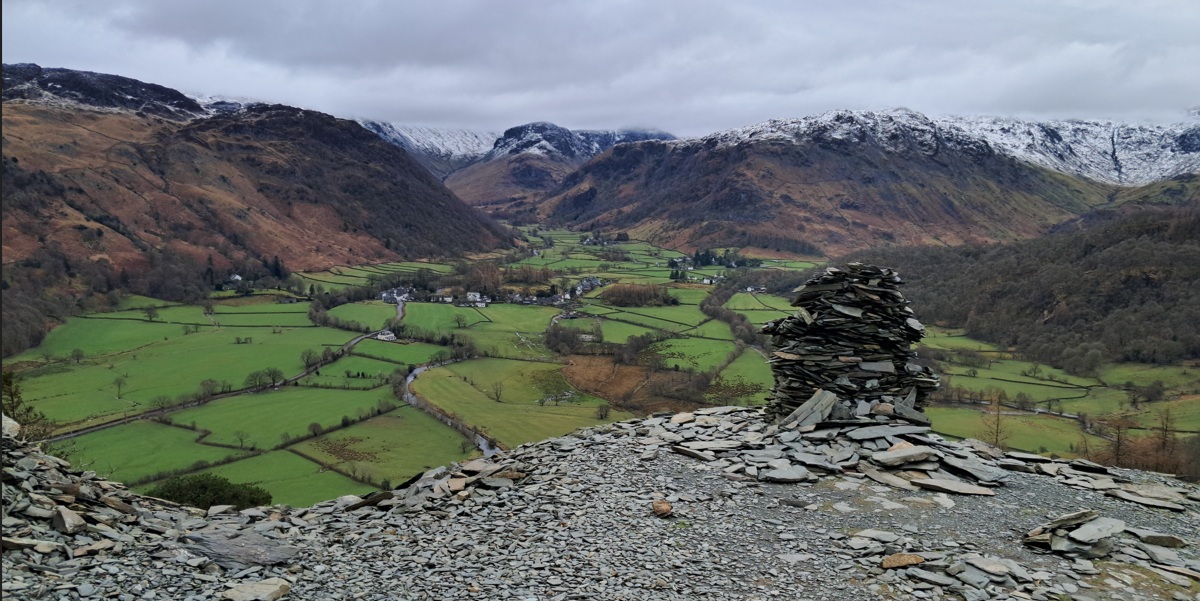
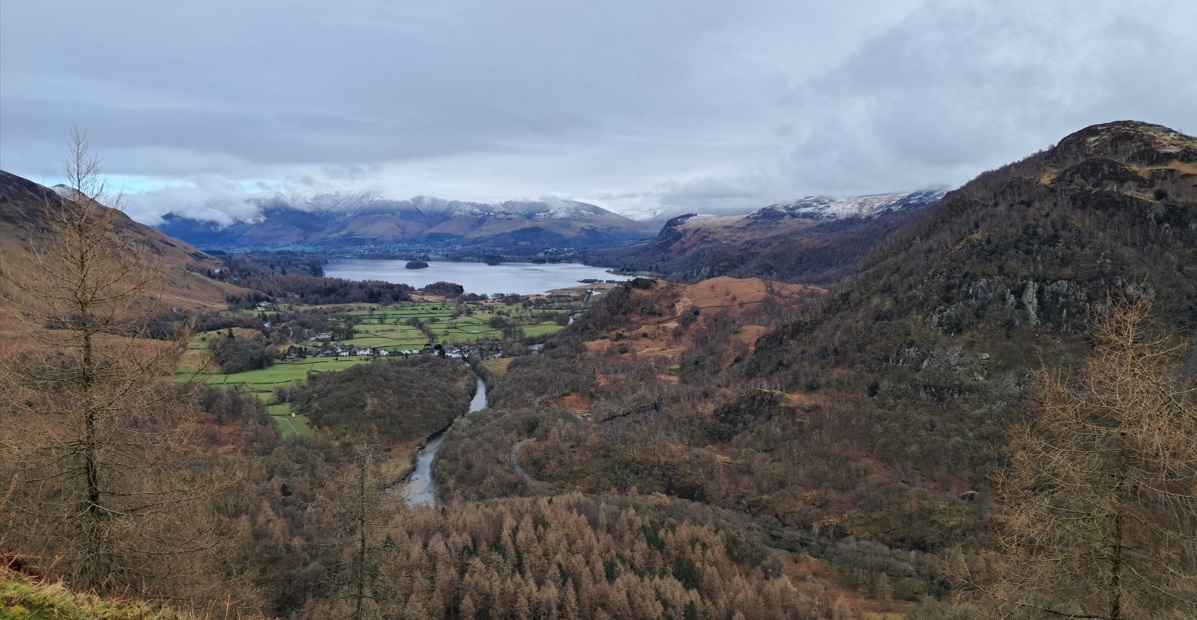
Our route from Grange went through Hollows Farm, a well known campsite in the rough forest area below Goat Buttress, and then followed Broadslack Gill to a col where a lesser path struck off steeply to some slate quarries where my poor memory thought the cave might be. This is one of several sites on Castle Crag where the old quarrymen would exploit the same band of green slate as the larger enterprise further up the valley at Honister. A good path leads through slate spoil and across levels and, eventually, we arrived at the very summit of Castle Crag, with its war memorial dedicated to John Hamer and ten Borrowdale men, all of whom perished in World War 1. And, as Wainwright suggests, a view in all directions that will be remembered.
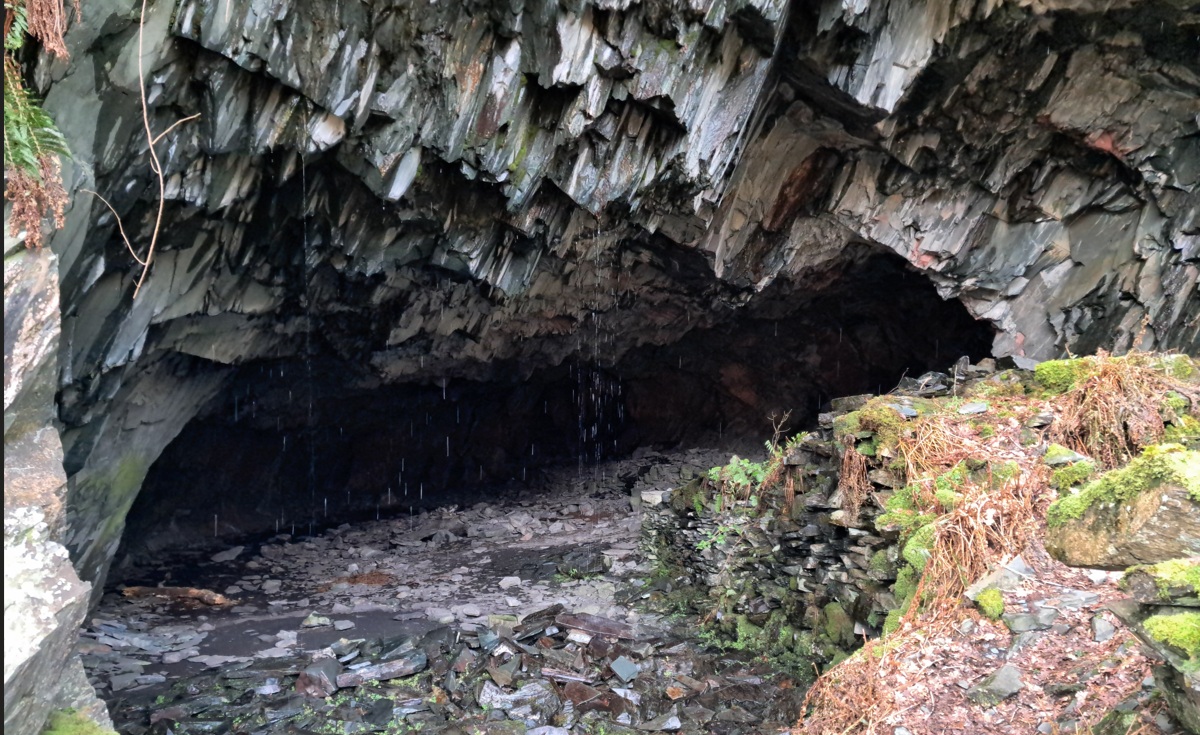
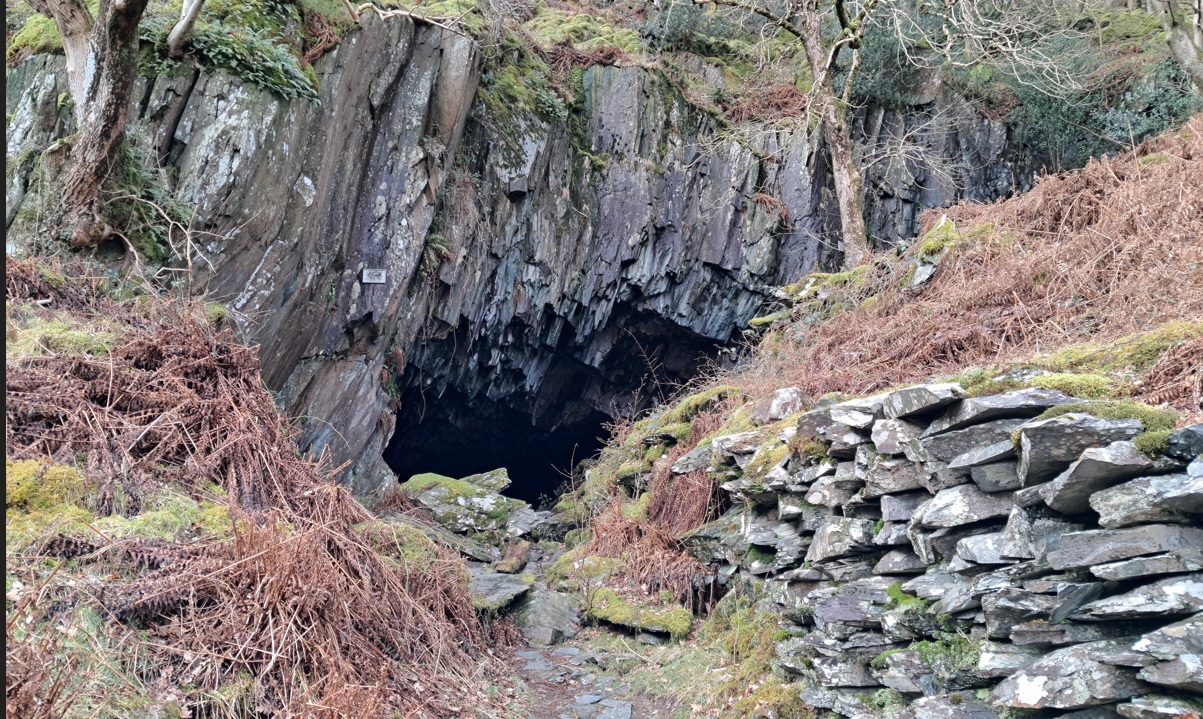
But we didn’t find Millican’s cave anywhere in the workings, so we dropped down to pick up the Cumbrian Way, at the side of the tumbling River Derwent, and made our way back towards Grange. The path soon left the river and climbed to another slate quarry which Alison thought looked more like the place. This was indeed High Howes Quarry, and a good path leaves the Cumbrian Way near its high point and zigzags leisurely up to several caves. The first cave looks promising, but isn’t what we remembered, but the one higher up was definitely what we were looking for.
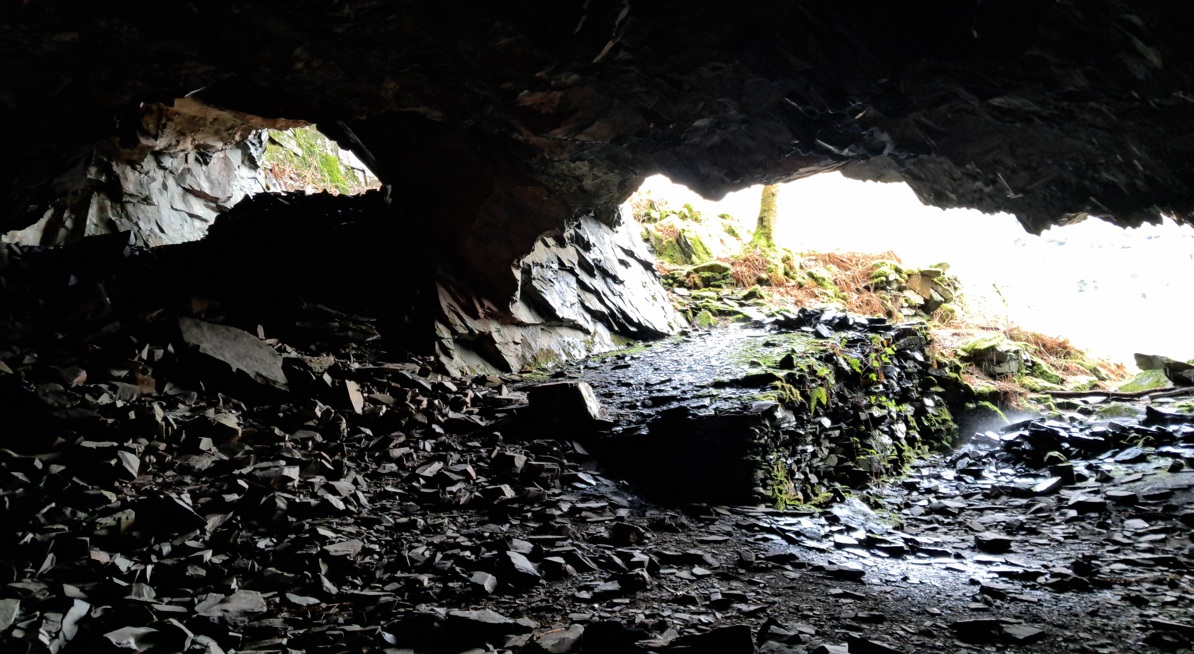
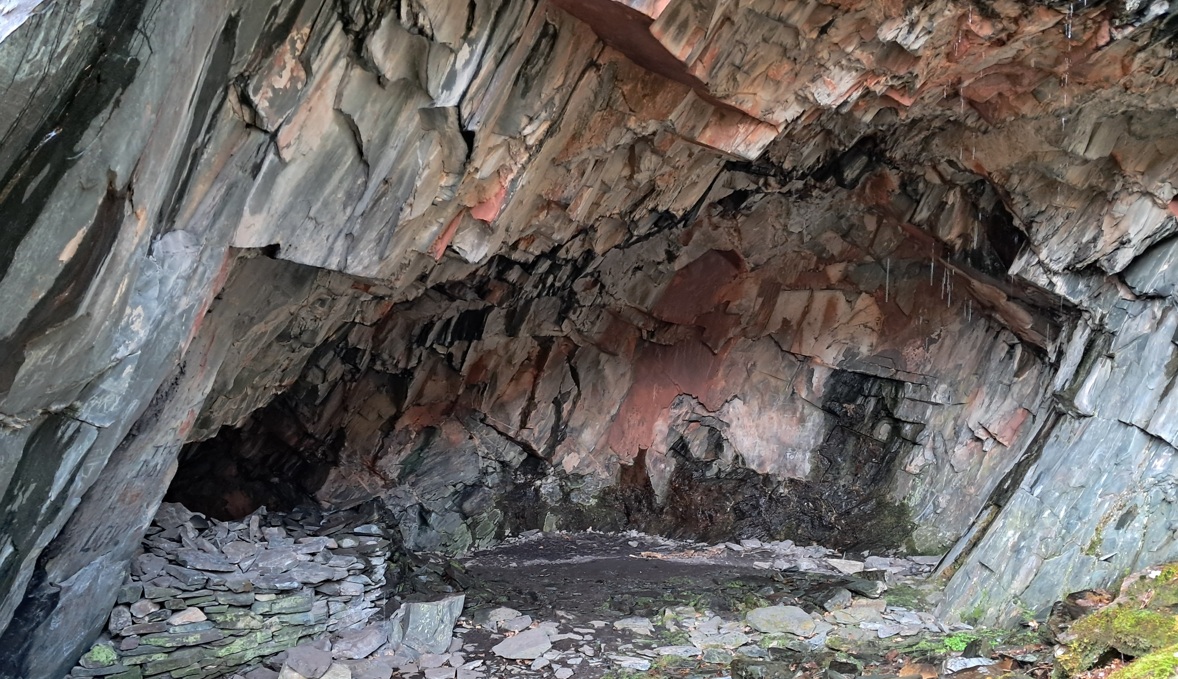
The only plaque we saw had no reference to Millican Dalton, but was a warning notice placed by the National Trust, but the lower (and wider) of the two entrances lead through a shower bath to a spacious cave. This is certainly an unlikely abode for anybody, but there is an internal route up to “the Attic”, as Wainwright has it, where Millican Dalton probably did live. Indeed the famous words, inscribed (according to folklore) by a friend of Dalton during an argument, can be seen – “Don’t waste worrds (sic), jump to conclusions!” I think the double-“R” is intentional, as the friend was, apparently, a Scot.
I make the location NGR: NY 25106 16007, and can recommend this walk for many reasons, including those quoted from Wainwright.
But, if you do intend to spend some time in the area, and are looking for a more realistic caving trip, you would get just what you need slightly further up the valley at Seathwaite where the Wad Mine (Wad = Graphite) has a fully bolted through route. This mine can be reached by an easy scramble up Sour Milk Gill, followed by a rough walk to the entrance to the highest adit, and is well described in RRCPC Newsletter Vol.38 No.2 Article 7 Red Rose Newsletter Vol38 No.2 Article 7 https://www.rrcpc.org.uk/newsletters/NL_V38_N2_A7.htm
— Alan
0 Comments